

The Role of Spring Wire in Precision Tools
Precision tools rely on springs and elastic components for functions ranging from force measurement and return mechanisms to vibration damping and contact pressure maintenance. In digital calipers, springs ensure the sliding jaw moves smoothly and returns precisely to position. In micrometers, ratchet mechanisms use spring components to apply consistent measuring force. In die sets and punch tools, spring-loaded components control stripping and ejection forces. All these applications share a common requirement: the spring material must maintain its elastic properties over millions of cycles without permanent deformation.
This is where 65Mn spring wire excels. As a medium-high carbon steel with manganese alloying, it provides the elastic limit, fatigue resistance, and dimensional stability that precision applications demand. Steel Wire produced from 65Mn grade can be manufactured to precise tolerances, ensuring that each spring performs identically within a production batch—a critical factor for automated assembly and consistent product quality.
Material Properties That Matter
65Mn spring wire's chemical composition is carefully balanced to deliver specific performance characteristics. The carbon content (0.62-0.70%) provides the base hardness and strength after heat treatment. Manganese (0.90-1.20%) improves hardenability, meaning the wire can be through-hardened even in larger diameters. Silicon (0.17-0.37%) contributes to deoxidation and strength, while controlled levels of phosphorus and sulfur minimize inclusions that could cause fatigue failure.
After quenching and tempering, 65Mn typically achieves a hardness of 42-48 HRC, with tensile strengths between 1000-1800 MPa depending on wire diameter. The elastic modulus is approximately 206 GPa, similar to other steels, but the high elastic limit means the wire can withstand greater deflection before permanent deformation occurs. This property is essential for precision tools where springs must operate near their elastic limit to provide adequate force in compact spaces. High Strength Wire made from 65Mn is particularly valued for applications where space constraints demand maximum force from minimal material.
Real-World Application: Automotive Precision Tools
The automotive industry relies heavily on precision tools for manufacturing, assembly, and quality control. One notable application involves torque wrenches used in vehicle assembly lines. These tools must apply precise torque values to bolts and fasteners, with accuracy directly affecting vehicle safety and reliability. The internal torque mechanism uses 65Mn spring wire components that must maintain calibration over hundreds of thousands of cycles.
A major torque wrench manufacturer conducted a two-year study comparing 65Mn springs against alternative materials. The results showed that 65Mn components maintained calibration within ±2% accuracy over 500,000 cycles, compared to ±4% for the competitor material. This improvement reduced recalibration frequency by half, saving the automotive assembly plant significant downtime and maintenance costs. The Durable Steel Wire used in these components was specifically selected for its fatigue resistance and stable elastic properties under repeated torsional loading.
Another Case: Medical Device Manufacturing
Precision is paramount in medical device manufacturing, where tools must meet stringent regulatory standards. Surgical instrument manufacturers use 65Mn spring wire in various forceps, clamps, and retrieval devices. These instruments require springs that provide consistent gripping force while maintaining sterility and corrosion resistance through appropriate surface treatments.
One medical device company reported that switching to precision-grade 65Mn wire for their laparoscopic instrument springs improved product consistency significantly. The tighter dimensional tolerances of the Ly Steel Wire product ensured that each instrument had identical actuation force, reducing the need for individual calibration during assembly. This not only improved manufacturing efficiency but also enhanced surgeon confidence in the instruments' predictable performance.
Processing and Quality Considerations
The performance of 65Mn spring wire depends heavily on proper processing. The manufacturing sequence typically involves: raw material selection, hot rolling into wire rod, pickling and coating, multiple cold drawing passes, intermediate patenting heat treatment, final drawing, and optional surface finishing. Each step must be carefully controlled to ensure the final product meets precision tool requirements.
Surface quality is particularly critical. Any scratch, seam, or inclusion on the wire surface can act as a stress concentrator, leading to premature fatigue failure. Reputable Steel Wire manufacturers employ non-destructive testing methods, including eddy current and ultrasonic inspection, to detect surface and subsurface defects. For precision tool applications, suppliers should provide material certificates (EN 10204 3.1) documenting chemical composition, mechanical properties, and dimensional verification.
Frequently Asked Questions
What is the shelf life of 65Mn spring wire? When stored in dry, climate-controlled conditions with appropriate protective coating, 65Mn spring wire can be stored for 12-24 months without performance degradation. Oil-coated wire should be used within 12 months, while plated or phosphated wire can be stored longer.
How should 65Mn springs be stress-relieved after forming? After cold forming, 65Mn springs typically undergo stress relief annealing at 200-300 degrees Celsius for 30-60 minutes. This removes residual stresses from forming and improves dimensional stability. The exact parameters depend on wire diameter and spring geometry.
Is 65Mn suitable for dynamic loading applications? Yes, 65Mn is widely used in dynamic loading applications when properly designed and heat-treated. Its good fatigue resistance makes it suitable for springs subjected to repeated cycling. However, for extremely high-frequency or high-impact applications, consultation with a materials engineer is recommended.
What are the cost considerations compared to alternative materials? 65Mn spring wire generally costs 20-40% less than alloy spring steels such as 50CrVA or 51CrV4, and significantly less than stainless spring steels. For precision tools operating in normal environments, 65Mn provides the best balance of performance and cost-effectiveness. High Strength Wire products in 65Mn grade offer particularly strong value for demanding applications.
Can 65Mn wire be welded? 65Mn is not typically recommended for welding due to its high carbon content, which can cause cracking in the heat-affected zone. Spring connections are usually made through mechanical fastening, crimping, or brazing rather than fusion welding.
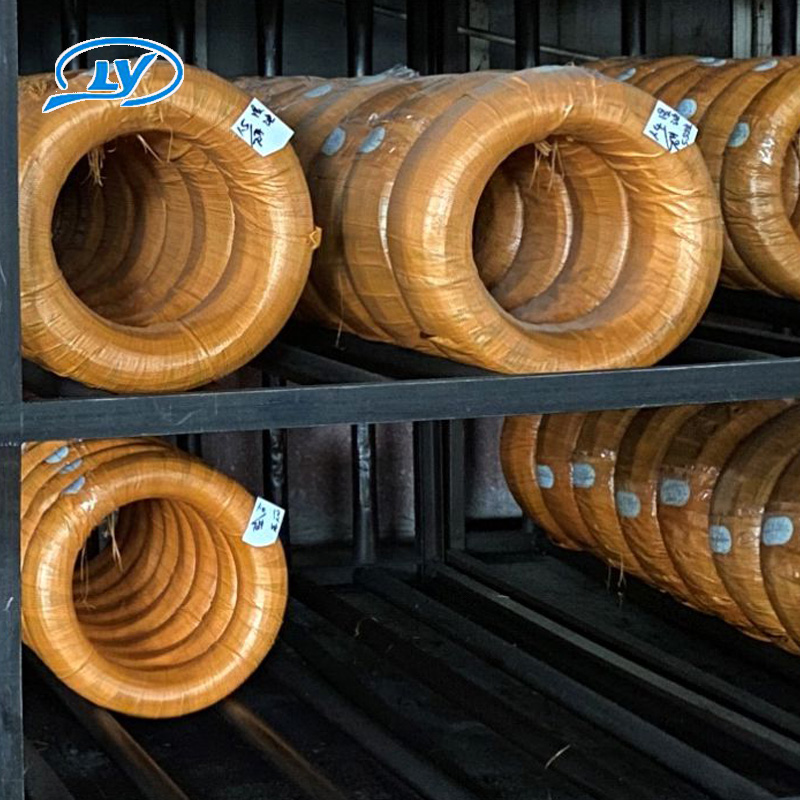
What packaging options are available? 65Mn spring wire is commonly supplied in coils, spools, or cut-to-length straight pieces. Precision applications often prefer spooled wire with controlled tension to facilitate automated spring coiling equipment. Packaging should include corrosion protection appropriate for the storage duration and environment.
Future Outlook for 65Mn in Precision Tools
As Industry 4.0 and smart manufacturing advance, precision tools are becoming increasingly sophisticated. Digital measuring instruments, automated assembly systems, and robotic tooling all require spring components that can deliver consistent performance in increasingly compact and complex designs. 65Mn spring wire, with its proven track record and continuous improvements in manufacturing quality, is well-positioned to meet these evolving demands.
Manufacturers are also developing modified 65Mn grades with improved cleanliness and tighter compositional control, further enhancing fatigue performance and consistency. These advancements, combined with the material's inherent cost advantages, ensure that 65Mn will remain a staple in precision tool manufacturing for years to come. For engineers and procurement professionals, partnering with knowledgeable Durable Steel Wire suppliers who understand precision tool requirements is key to maximizing the benefits of this versatile material.
Final Thoughts
The success of precision tools depends not only on innovative design but also on the quality of every component, including the springs that often go unnoticed. 65Mn spring wire provides the strength, elasticity, and reliability that precision applications require, backed by decades of proven performance across industries. By understanding its properties, proper processing, and appropriate applications, manufacturers can leverage this material to create tools that deliver accuracy and durability in equal measure. As the precision tool industry continues to advance, 65Mn remains a foundational material that engineers can trust for critical spring applications.